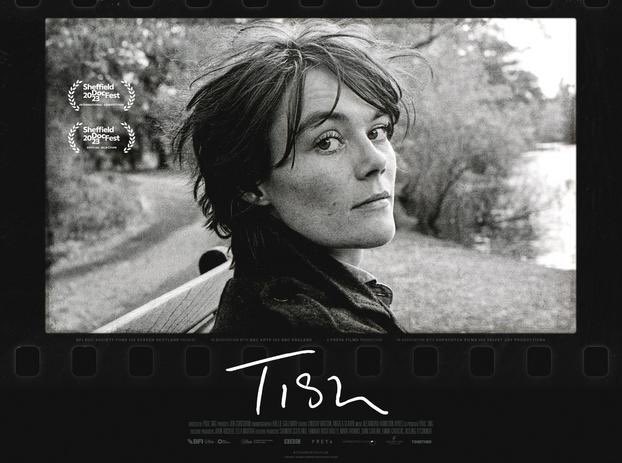
Last weekend, I very much enjoyed seeing the documentary “Tish”, about one of my photographic inspirations, Tish Murtha. I’m pretty sure many of you who read the blog will be aware of the name and the work, but as a break from the usual mainly visual posts, I felt I’d like to share some thoughts about her work, particularly an aspect of one project which set off a chain of thoughts and reflections… (What follows is an adaptation of an essay I wrote for a course; if it reads dry and academic in places, that’s why…)
Third of ten children, moving early in life with her family to council housing in the Newcastle district of Elswick, Murtha used the new educational funding freedoms developed through the sixties to leave the North East and study with David Hurn at the University of Wales, Newport’s, School of Documentary Photography. She then returned to start her photography career in documenting, predominantly, areas in the West End of Newcastle during the late 70s into the 80s.
It’s obvious from the work that Tish was very much embedded in her community and set out to highlight all aspects of life in and around Newcastle. Her practice looked at marginalized communities and she approached these subjects with the passion and empathy one would expect from someone who always felt herself a member of that community, even if her views sometimes challenged; she was nothing if not critical and independent of thought.
During this early part of her career Murtha became known for two significant bodies of work exhibited under the titles “Juvenile Jazz Bands” (1979) and “Youth Unemployment” (1981). Other work from the time was posthumously collected under the title “Elswick Kids” by her daughter Ella, who manages her mother’s archive and has been the driving force behind the documentary.
Later in the 1980s Murtha moved to London for a period. During that time she worked with Bill Brandt, Brian Griffin and Peter Marlow on the project “London By Night”, as well as editorial work for the publisher Edward Arnold.
She then returned to the North East, continuing in the tradition of her earlier work, and latterly was featured in several surveys of photography and art of the 1970s and 1980s.
Tish Murtha died in 2013 due to a brain aneurysm. Her work is held in various galleries including the National Portrait Gallery and the Amber Collection in Side Gallery, Newcastle-Upon-Tyne.
Both of the projects “Juvenile Jazz Bands” and “Youth Unemployment”, while well-received in many circles, also acted as lightning rods for the early Thatcherite period’s version of culture war; indeed, “Youth Unemployment” was the subject of questions asked in Parliament.
The Juvenile Jazz Bands were originally the children’s section of adult brass bands that accompanied Trade Union marches in the industrial North East in the 1920s and 1930s; the movement ebbed and flowed, experiencing a brief resurgence during the 70s and 80s, almost exclusively in the mining areas of the North East and the Midlands. While Britain as a whole began to confront the impending post-industrial period, with strikes and the economic downturn leading to recession, the Juvenile Jazz Bands provided a distraction among communities across the Northeast as they provided welcome distraction and some sense of purpose. Local authorities in the area fixed on this resurgence and its diversionary qualities and many provided a system of grants to support the running of the bands, which in turn led to the further growth of the phenomenon.
Murtha was commissioned by Amber Film and Photography Collective to document these Juvenile Jazz Bands, with the resulting project later exhibited at Side Gallery . For Tish this was a problematic project from the start as she made her opinion well known on what she thought about the existence and place in the community of these bands. Her opinions and comments were featured in an interview in Newcastle’s Evening Chronicle. (All the comments and quotes featured here come from the introduction to Bluecoat Press’ 2020 publication “Juvenile Jazz Bands”)
In the interview Murtha paraphrases her statement in the Exhibition documentation, but both interview and statement make her opinion clear; reproduced here are parts of the statement, but the sentiment and in places the precise wording of the interview are identical:
“To be accepted into and remain in the Juvenile Jazz Band a child must put aside all normal behavior, and become the plaything of the failed soldier, the ex-armed forces members, and their ilk; any spark of individuality is crushed by the military training imposed, until the child’s actions resemble those of a mechanical tin soldier, acting out the confused fantasies of an older gentleman.”
“The observable political associations and affinities these bands cultivated with certain right-wing movements made their existence doubly disturbing. A Sunday Mirror article (summer 1977) reports an incident in which a Juvenile Jazz Band, booked by the National Front to lead one of its marches through the London area, was ordered to remove two of its young colored members, before being allowed to continue the march; the band in question complied, with total disregard to either its full implications or the personal feelings of the kids involved.”
This statement and a few others she gave to the press at the time caused a major backlash amongst the community she was documenting. Parents of the band members were said to be appalled at her comments which they took as a reflection on them in their role as parents. Murtha was caricatured as “The Demon Snapper.”
The local press exploited this response, further stoking the controversy surrounding the project by interviewing the parents and organizers and seeking antagonistic responses to Tish’s comments.
One parent is quoted as saying
“Today most people are out for number one as is Miss Murtha. It is obvious from that interview that she has produced a very controversial article to gain more publicity for herself.
“Did she never see how much the children enjoyed the carnivals, or was she blinded by her idol, the camera?”
What I took from this project, and the ensuing controversy, is the light that it casts on the notion of truth in documentary practice.
When we consider a piece of documentary work, we should always bear in mind the multiple places in which truth is found. In simplistic terms, we can identify three truths at work in any project; the truth which the documentarian holds as her purpose in creating the work, and seeks to convey to the audience; the truth according to the subject(s) of the work; and finally the truth of the viewer of the work. While bright-eyed idealism may wish to make claims that the skillful photographer will always present a truth at the very least in sympathy with, if not always directly aligned with, the subject, and that she will present that truth in such a way as to persuade the viewer to accept her interpretation, the reality is, of course, far more complex.
This comes across clearly in the case of the famous “Migrant Mother” image by Dorothea Lange. Skilful cropping, and indeed titling, of the image, place this woman where Lange intended to tell her (Lange’s) version of the truth. With the full background removed (a tent becomes only a backdrop; her children are reduced in number, and those who are retained are given an air of mystery because their faces are turned away from the viewer’s gaze), Lange has “de-situated” the woman, in order to “re-situate” her with the title given to the image. Lange was, as far as we know, very satisfied with the image and the truth it told (she stated as much in later articles and interviews). The “Migrant Mother”, Florence Owens Thompson, and her family were on the other hand disapproving of the image and the use to which it was put. They felt that Lange’s “manipulation” of the image of their mother stripped her of agency; the woman they knew as a strong, resourceful, proud Mother became, in Lange’s hands, careworn, in a sense pitiable, in ways they (and they contend, Thompson herself) did not approve or even recognise. (their opinions were given in Sally Stein’s book “Migrant Mother, Migrant Gender”)
This is a mere scratch on the surface of the issues around that image, but even that brief observation alerts us to the shifting nature of truth in documentary photographic practice; each time we pin the truth to a particular outlook, we are forced to confront the fact that we may have privileged a particular version of the truth at the expense of another, equally valid.
In the case of Murtha’s “Juvenile Jazz Bands”, it very quickly becomes obvious that there are a multitude of competing “truths” at work. Murtha made her views clear from the start, as we have seen; parents and children refuted these views, some with the encouragement of a local press who (it is no stretch to imagine) had their own agenda. The organisers of the Juvenile Jazz Bands were also canvassed for their opinion, and the “failed soldiers” of Murtha’s initial criticism did not disappoint.
To a degree, the images are as one would expect; well-drilled ranks of teen and pre-teen youngsters, in crisp uniforms, with shiny instruments. The impression generally given is of rather a joyless experience; subjects are serious, either intensely focused on getting the movements correct, set faces intent on fulfilling the direction given. Several images contrast these sombre children with more carefree adults, relaxing in a cafe, enjoying the apparent liberty that’s denied the militarised ranks of the band members. Only occasionally does the mask slip; in one picture a teenage boy is laughing at the dexterity with which he wields his drumsticks, while two bystanders grimace, during practice in “civilian” clothes; in another a group of girls appear to be singing on the bus taking them to or from a carnival appearance, with no adults apparently present (or at least nearby).
The greatest contrast, however, is with the images Murtha took of the”toy” bands. For various reasons, some children were excluded from the “proper” bands. Denied the regimentation that their peers were subjected to, these children formed their own bands; anarchic, inventive, they are the antithesis of the world of uniforms and strict formations. The faces are suffused with joy, and adults are notably absent.
This leads me to wonder what weight I should give the public utterances of a photographer when looking at a project like Murtha’s Juvenile Jazz Bands. Of course, photographers will generally make statements about their work. Often circulation of these can be restricted to specialist publications, or nowadays to websites, podcasts and blogs similarly limited in audience reach. If they do appear more widely, often the comments are anodyne generalisation. To have taken such a confrontational stance as Murtha did, in such a widely circulated vehicle as the Evening Chronicle, would appear to be counterproductive. Is it not the responsibility of the photographer to bear (almost) mute witness?
In my original essay, I tried to make the case that Murtha’s words about the juvenile jazz bands were not a final statement on the matter, but rather a provocation. In the light of the responses provoked, and the environment thus created, we can look on the photographs of the unregulated, uncontrolled “toy” bands as the defining statement of the project. The images presented could have simply recorded those within the Juvenile Jazz Band system, and those excluded; her point is made not by comments overtly critical of structured, restricted forms of activity, but by the smiling chaos of the counterpoint images of “kids being kids”.
On further reflection, however, and having seen the documentary, with all the new insights it gave me into her life and personality, I concede that I was guilty perhaps of seeing layers of meaning that were not there; Tish was not staging a “provocation”, she was speaking bluntly and honestly.
But for all that, the fact remains; her point is ultimately made with images rather than words.
 Mandy Edwards Documentary
Leave a comment